
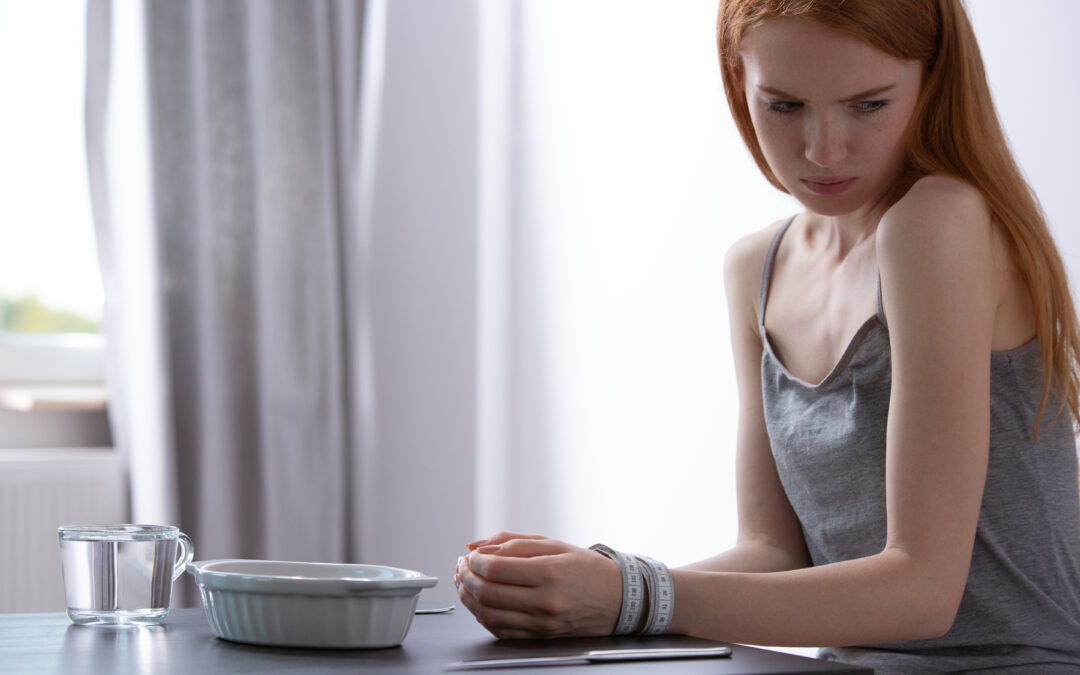
It’s not the food, not really. For many women, eating disorders begin as an attempt to take back control in a world that constantly demands perfection, poise, and productivity. What starts as self-discipline can slide into self-punishment, and before long, that control starts running the show. But behind every rigid calorie count and every anxious glance in the mirror lies a deeper story about pressure, identity, and survival.
The Weight of Expectations
The expectations placed on women are relentless and contradictory. Be confident, but not too confident. Be fit, but not obsessed. Be successful, but always soft. It’s a constant tightrope walk between being “enough” and being “too much.” Eating disorders often grow in the cracks of that impossible standard. They thrive in the quiet moments when exhaustion from people-pleasing meets the desperate need to reclaim autonomy.
That’s where the trouble begins. Control feels safe, predictable, and tangible. Food becomes the one variable a woman can manipulate when everything else feels out of reach. For a while, that illusion of mastery feels empowering. But soon, it takes more from her than it ever gives. The line between discipline and distress blurs until it’s hard to tell which side she’s on anymore.
The Hidden Reason Why Women Struggle
There’s no single reason why women struggle with eating disorders, but culture certainly doesn’t help. From a young age, girls are praised for restraint. “You have such willpower” sounds like a compliment until it becomes the foundation of worth. Perfectionism becomes a performance, not just in how they eat, but how they live.
Many women with disordered eating patterns are high-achieving, deeply empathetic, and hyper-aware of others’ needs. They’re often praised for being the “strong one” or the “reliable one.” But that identity can trap them. When emotional pain surfaces, it doesn’t feel safe to fall apart, so it gets redirected into something measurable: calories, steps, sizes. It’s a quiet rebellion against vulnerability disguised as self-control.
And then there’s social media, where filters and “what I eat in a day” videos blur reality beyond recognition. The constant scroll makes it easy to forget that most people are editing their lives down to their most flattering angles — and their most deceptive illusions.

The Quiet Shame Around Women’s ED Treatment
While progress has been made, women’s ED treatment still carries a whisper of stigma. There’s this outdated belief that recovery is just about eating more or gaining weight. But true healing digs deeper. It’s about addressing what food was protecting a woman from: whether that’s grief, fear, loneliness, or anger that never felt allowed to exist.
Unfortunately, many women don’t seek help until things feel dire, partly because our culture still confuses “doing fine” with “functioning.” A woman can excel at work, keeping a perfect home, and laughing with friends while fighting an invisible war with her body. The mask is convincing.
That’s why modern treatment approaches now focus on integrating physical, emotional, and social recovery. Therapy helps women challenge perfectionistic thinking and unlearn the belief that worth depends on control. Nutrition counseling restores trust in the body’s signals, while community and group therapy remind them that they were never alone in this. Healing isn’t about “fixing” the body, it’s about finding peace inside it again.
Redefining Strength and Success
Part of recovery is learning that real strength doesn’t come from restriction or perfection, but from presence. There’s power in sitting with discomfort instead of running from it, and there’s courage in letting go of the performance of being “fine.”
Success doesn’t have to mean control. For many women, it’s actually the opposite,it’s learning to let go. To allow food to be food again, not a moral test. To see a mirror as a reflection, not a verdict. To rebuild trust with the body that’s been trying to keep them alive all along.
This redefinition of strength can ripple into every area of life. When a woman stops fighting her body, she often finds the energy to show up in the ways she always wanted: creatively, socially, emotionally. Freedom isn’t just about eating again. It’s about living again.
Healing Without Perfection
The hardest part about recovery is realizing it’s not linear. There are good days and days that make her want to give up. But progress doesn’t vanish just because perfection does. In fact, the messiness is proof she’s healing, because she’s choosing flexibility over control, trust over punishment, and connection over isolation.
Support systems matter here. Whether it’s a therapist, support group, or trusted friend, healing grows in spaces where honesty is met with understanding. Compassion builds where shame used to live. Over time, food becomes neutral again. The body feels less like an enemy and more like home.
Recovery is rarely about becoming who she used to be. It’s about becoming who she’s always been underneath the noise, someone who deserved peace long before she ever earned it.
Moving Forward With Grace
Freedom from an eating disorder doesn’t mean the thoughts disappear forever. It means they no longer call the shots. For many women, healing starts with one simple shift: realizing their worth was never conditional to begin with.
It takes bravery to trade control for peace, to choose nourishment over punishment, and to forgive a body that was only ever trying to protect them. Recovery isn’t about erasing the past, it’s about reclaiming the present. And every small act of kindness toward the body is a quiet declaration: I’m still here, and I’m still choosing life.
Cole Dyar is the Executive Director & co-founder of Neurish Wellness. He has been working in the behavioral health field in operational, clinical, organizational, and managerial capacities for thirteen years. He holds a degree from the University of California, Santa Cruz in sociology and is a Licensed Advanced Alcohol and Drug Counselor (LAADC) as recognized by CCAPP. Cole holds a Master of Science in Industrial/Organizational Psychology including: Organizational Leadership and Design, a Post-Masters in General Marriage and Family Therapy, and is currently a doctoral candidate in MFT with an emphasis in Systemic Administration & Entrepreneurship.