
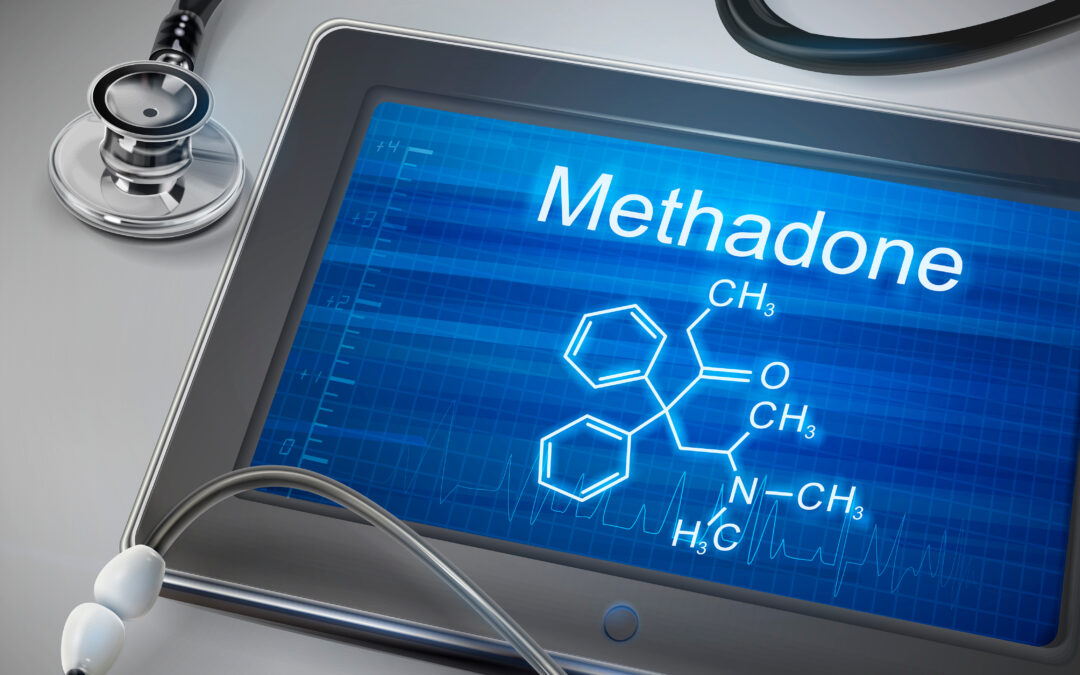
If you’re asking yourself, “Is methadone addictive?”, you are not alone. Many people reach this question while researching treatment options for opioid addiction for themselves or someone they care about, and want clarity without replacing one problem with another.
Methadone can be addictive, but that’s only part of the picture. When it is prescribed, monitored, and used within a structured treatment program, it has helped many people reduce opioid use, manage withdrawal, and regain stability.
How Does Methadone for Opioid Addiction Treatment Work?
Methadone is a long-acting opioid medication commonly used in opioid addiction treatment. It binds to the same receptors as heroin or prescription painkillers but does so more slowly and steadily.
This helps reduce withdrawal symptoms and cravings without the intense highs and crashes of short-acting opioids, allowing people to focus on treatment, daily responsibilities, and recovery.
Methadone Addiction vs Dependence
To understand methadone addiction vs dependence, it helps to separate two terms that are often confused but medically distinct.
- Physical dependence means the body adapts, and withdrawal can occur if methadone is stopped suddenly.
- Addiction involves loss of control and continued use despite harm.
- Methadone can cause physical dependence with long-term use.
- When prescribed and monitored, methadone isn’t typically linked to addictive behavior.
- The difference depends on use, purpose, and medical supervision.
So, is methadone addictive long-term? No, when prescribed and monitored, long-term methadone use doesn’t lead to addiction but rather fights against it.
Methadone Side Effects and Risks
Understanding methadone side effects and risks is an important part of using the medication safely and knowing when additional support may be needed. Like all opioid medications, methadone affects the central nervous system and requires careful monitoring.
Common methadone side effects and risks may include:
- Drowsiness or fatigue
- Constipation or nausea
- Slowed or shallow breathing, especially during dose changes
- Increased risk when combined with alcohol or benzodiazepines
- Higher risk when taken in doses above what is prescribed

Common Misunderstandings About Methadone and Addiction
Let’s break down some common misunderstandings that often come up when people ask, “Is methadone addictive?”
“Methadone replaces one addiction with another”
False. Addiction is defined by loss of control and compulsive use, not physical dependence alone. When methadone is taken as prescribed and medically supervised, it helps stabilize opioid use rather than reinforce addictive behavior.
“People on methadone cannot live a normal or productive live”
False. Many individuals on methadone work, raise families, attend school, and maintain stable routines. For many, methadone provides the structure needed to rebuild daily life.
“Methadone is only for severe or hopeless addiction”
False. Methadone is one of several evidence-based treatment options and may be appropriate at different stages of opioid use disorder, not only in extreme cases.
“Once you start methadone, you can never stop”
False. Treatment length varies. Decisions about tapering are based on individual progress, medical guidance, and recovery goals rather than a fixed rule.
“Methadone alone is enough for long-term recovery”
False. Methadone is a medical tool, not a complete solution. Long-term recovery outcomes improve when medication is combined with therapy, support, and relapse prevention planning.
Is Methadone Safer Than Other Opioids?
Compared to illicit opioids, methadone is considered safer because it is regulated, dosed consistently, and medically monitored. This reduces exposure to unpredictable substances and lowers overdose risk when used as prescribed.
However, methadone still carries risk, especially when mixed with alcohol or sedatives. Safety depends on supervision, consistent dosing, and integration with a broader treatment plan.
Practical Guidance if You’re Considering or Using Methadone
If you or a loved one is considering methadone or already using it, informed decisions and ongoing support can make treatment safer and more effective. Here are some helpful guidelines:
- Work with a licensed medical provider experienced in opioid treatment.
- Take methadone only as prescribed and at the same time each day.
- Avoid alcohol and sedatives unless specifically approved by a provider.
- Ask about counseling or therapy alongside medication.
- Discuss long-term goals, including tapering, when appropriate.

Comprehensive Recovery Services
Opioid addiction affects individuals and families across the country, and choosing the right level of care can feel overwhelming. While methadone can support recovery, outcomes are stronger when treatment addresses the full picture, not just medication.
At Neurish Wellness, we can help you find a continuum of care designed to support people at different stages of recovery, including:
- Detox services to help individuals stabilize safely during withdrawal
- Residential treatment for structured, immersive support
- Medication-assisted treatment (MAT) that combines medications like methadone with clinical oversight
- Sober living options that provide accountability and stability during early recovery
A Supportive Next Step
Methadone can be helpful, but it’s rarely enough to fully address addiction. Successful recovery often requires therapy, structure, and support beyond managing withdrawal. If you have questions about methadone’s role in recovery, we’ll offer confidential guidance to help you explore safe and effective treatment options.
Reach out today to find hope and sustainable, evidence-based strategies for recovery.
FAQs: Is Methadone Addictive?
Can methadone be used safely for long-term treatment?
Yes, methadone can be used safely long-term when it is medically supervised and combined with regular monitoring. Many people remain on methadone for extended periods as part of a stable treatment plan, especially when it supports daily functioning and reduces relapse risk.
Can methadone cause withdrawal?
Yes, stopping methadone suddenly can cause withdrawal symptoms. Any dose changes should be made under medical guidance.
Does methadone replace one addiction with another?
When used correctly, methadone treats opioid addiction rather than replacing it. Problems arise when it is misused or unsupported.
How long do people stay on methadone?
Treatment length varies. Some people use methadone short-term, while others need longer support based on medical guidance.
Can methadone be misused?
Yes, taking more than your prescribed dose or using methadone without supervision increases risk and may signal the need for additional care.

Cole Dyar is the Executive Director & co-founder of Neurish Wellness. He has been working in the behavioral health field in operational, clinical, organizational, and managerial capacities for thirteen years. He holds a degree from the University of California, Santa Cruz in sociology and is a Licensed Advanced Alcohol and Drug Counselor (LAADC) as recognized by CCAPP. Cole holds a Master of Science in Industrial/Organizational Psychology including: Organizational Leadership and Design, a Post-Masters in General Marriage and Family Therapy, and is currently a doctoral candidate in MFT with an emphasis in Systemic Administration & Entrepreneurship.